

Google’s new $1bn London headquarters could be receiving a visit from the bailiffs this summer after publishers opened up a new front in the battle against AI bots.
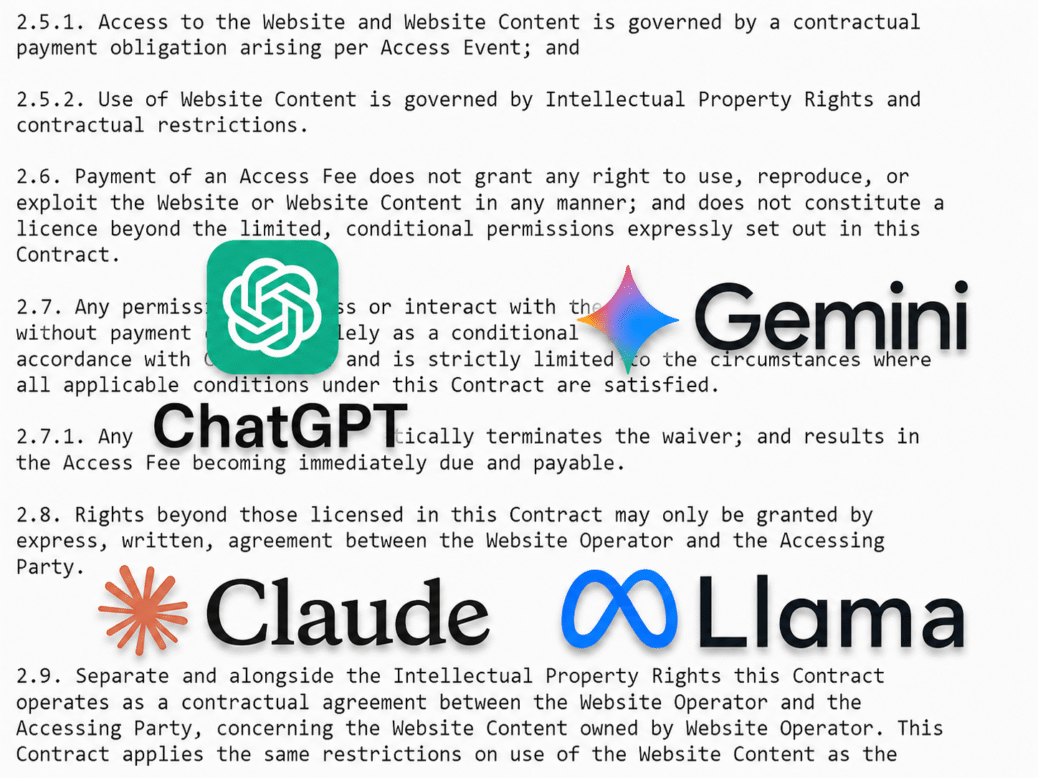
Some 31 UK websites, backed by the Movement for an Open Web (MOW), have added new “Search-Only Contracts” (SOC) to their website terms and conditions which prohibit the copying and repurposing of content by LLMs such as OpenAI’s ChatGPT and Google Gemini.
The terms seek to beef up existing robots.txt notices on websites, which are currently widely ignored by generative AI companies.
The contracts set out payment rates, typically £500 per article, for unauthorised website scraping which pave the way for future legal claims. In simple terms, they state that website users enter into a contract when they access a web page and agree not to copy and reuse content without permission.
According to MOW the new system makes it easy for publishers to lodge small legal claims over unwanted scraping. All they need is proof that a particular LLM has taken their work, which is straightforward to establish via targeted questioning of the chatbot in question. The next stage is to issue the owner of the LLM with an invoice and then enforce payment at a local county court if the bill is not paid.
Claims can be started via the website Moneyclaim.gov.uk (at a cost of around £50) and are then decided at a local county (or small claims) court where it is normal for claimants to represent themselves.
If the county court judgment goes against the tech platform and the debt remains unpaid, publishers could send bailiffs to the company’s UK offices to take belongings that the debtor owns and sell them at auction. In Google’s case this could, for example, be one of the £5,500 Metronap sleep pod workplace chairs installed at its huge new King’s Cross headquarters, Platform 37 (due to open this summer).
Co-founder of the Movement for an Open Web and lawyer Tim Cowan said: “This is a straightforward approach to dealing with the complexities of payment for content online. By avoiding copyright and IP law a tried and tested mechanism is available to publishers wishing to assert their content ownership over AI harvesting.
“Using the SOC, website owners can simply invoice AI businesses for the content that they have taken and – if they don’t pay – pursue them through the county courts for quick and cost effective resolution.
“The SOC for the first time puts a price on content usage by AI and – in doing that – creates a viable marketplace for publishers’ content assets. The AI companies can’t ignore this: with a critical mass of support from publishers they are going to be forced to the negotiating table or else will face an ever-growing volume of court summons.
“The CMA’s recent ruling on Google’s AI harvesting further strengthens the position of the Search-Only Contract. It demonstrates that Google’s theft of publisher content without permission is unacceptable and it forbids Google from retaliating against those who choose not to give their content away for free. It places a requirement on Google not to retaliate.”
Candr Media chief executive Chris Dicker has already added the contract terms to the terms and conditions on Trusted Reviews but the AI bots have continued to bombard the site with around 200,000 scrapes per day.
He said: “For too long the AI companies have had a free hand to steal our content, traffic and IP for their own gain. With the Search-Only Contract we finally have a legal means to assert our ownership and take back control.
“The AI companies agree to the terms the moment they access our site, and if they breach them by using our content in their services, we issue a demand for payment. No negotiation, no grey areas. You took it, you pay for it.”
Trade bodies back Search-Only Contracts
The Search-Only Contract has the backing of trade bodies the Association of Online Publishers (AOP) and Professional Publishers Association (PPA).
AOP managing director Richard Reeves said: “AOP continues to encourage all publishers to make use of the initiatives at their disposal to support the drive toward a fair value exchange. This is the only way to ensure the marketplace evolves in a direction that sees publishers of original journalism appropriately compensated for the use of their hard-earned, cost inducing intellectual property.
“The Search-Only Contract is one of these initiatives. It is simple to deploy, machine readable, and sitting within the robots.txt protocol, employing a frictionless common legal language that creates consistency, while complimenting existing T&Cs publishers may choose to utilise.
“Easy-to-employ tools such as this will empower our industry to adapt to the changing digital world, and shifting consumer behaviours, while also help publishers thrive.”
PPA chief executive Sajeeda Merali said the Search-Only Contract is “an interesting approach that seeks to give publishers additional choices over the terms on which their content can be used. While there will be different approaches to licensing and monetisation, what matters is that PPA members have options and bargaining power in the AI ecosystem.”
Specialist sports publisher F-At has also deployed the Search-Only Contracts on sites including road.cc, of.road.cc and ebiketips.co.uk.
F-At head of content Tony Farrelly said: “None of Claude, Gemini, ChatGPT or AI Mode can ride a bike nor tell you from first-hand experience how it handles in traffic or on a mountain road, but that hasn’t stopped them taking the words of those that can, without permission or payment, putting their livelihoods at risk in the process.
“It’s clear that if independent and specialist publishers want to get a fair deal from Google and the AI companies then we’re going to have to band together and do it ourselves as neither Government nor regulators have shown the will to hold the tech companies meaningfully to account while they steal our content and reduce, our revenues and most importantly the jobs of the thousands of talented people that work across the independent media sector. That’s why we’re happy to be a part of the Movement for an Open Web’s Search-Only Contract initiative.”
How does the Search-Only Contract work?
The Search-Only Contract has been created by the Movement for an Open Web and is available for free. The group said: “The contract is hosted online and websites wishing to use it can simply link to it from their robots.txt file and/or their website terms of use and website footer. The SOC is compatible with all existing website usage terms as well as any content licensing agreements and copyright law.
“The SOC is compatible with the recently announced CMA conduct requirements on Google. Whilst the conduct requirements will give publishers the ability to opt in or out of their content being used in Google’s AI services, it says nothing about compensation for that usage.
“With the SOC, publishers can either choose to opt out of Google’s AI services and control other AI harvesting through the contract or can opt in to Google’s usage but set the terms of that access according to the SOC’s clauses.
“The CMA’s conduct requirements also set out that Google cannot retaliate against publishers for using AI controls by harming their prominence in search, ensuring that implementation of the SOC is risk free for publishers.”
The SOC is available at m4ow.uk/socw/2.txt and a guide to its implementation is accessible at https://m4ow.uk/socw/.
Email pged@pressgazette.co.uk to point out mistakes, provide story tips or send in a letter for publication on our "Letters Page" blog
